Sunday, February 26, 2012

The Chilean Coast


This is a video made by Klaas Voget that features he and Victor Fernandez. Together, two of the best wavesailors in the world. The video shows what I consider pretty typical days at Matanzas and Topocalma. They are good days, but not what you would really consider "e-word good*" days at these locations. Days like these happen about 10-20 days per month in November, December and January from what I can tell.. Then there are about 5 days per month that are 30 knots and double mast high.

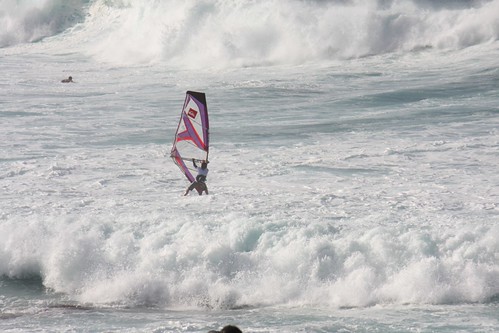
Before setting off on my journey to Chile, I wasn't really sure what to expect. I had expectations of it being windy and wavy, but what I found was a coastline that has basically more wind and more consistent waves than anywhere else in the world** It was more than getting my fill, a lot of days were more than I could comfortably handle. Many days ended up being more of swimsurfing than windsurfing for me.

Maybe the most useful thing I can offer on this blog is to help set some kind of bar for folks considering the journey to Chile in the winter. I don't mean this in an offensive way to anyone, but after my trip to Chile, I still don't know if I'm quite up to the skill level for much of the coast sailing. Also, it seemed like about half the people who were there had a lot of experience port tack sailing and were ready to tackle the big challenges of sailing there. Me? I can do a few freestyle tricks. I can jibe and tack pretty darn consistently. I've sailed in Maui, Punta San Carlos, Pistol River and spots on the coast in Northern California (all starboard tack wavesailing). Sailing the coast of Chile felt very borderline "I should be there".

It was amazing. Every day of windsurfing there felt like one of the hardest days of sailing I've ever had. It was rewarding connecting turns for the first time going the "wrong way", but in hindsight, I was most definitely out of my element. Had the trip only been a week, or even much less than a month it might not have been worth it.***

Here's what I would make the requirements for someone seeking advice:

- Rock solid jibing and tacking.
- Lots of experience sailing extremely underpowered and overpowered on small gear in wave conditions. Also, experience fighting strong currents.
- At least some port tack wavesailing experience. A lot of Europeans arrived with a good deal of this in place. Also, I think South Africa is a good place to learn to sail port tack where the conditions are not as challenging.
- A mindset for challenging your sailing level to the max.

If you feel like you meet all of these and would like the most amazing wavesailing experience of your life, then you should start planning your trip now. You will not regret anything about it. I promise.

*I hate the word "epic".
** Not sure about the wind, as it didn't blow nearly every day when I was there, but for sure there are almost always waves on the Chilean coast. Big ones.
***Just because the learning curve is long. That said, there are really consistently windy flat water spots worth visiting, not to mention Chile just being worth visiting for culture and nature.

Wednesday, February 15, 2012

If you lived in Southern Chile


If you lived in Southern Chile, your Tuesday afternoon session might look something like this.

I ditched my gear for a few weeks to do some standard backpacking style travel in the Lake Region of Chile and saw this scene going on in a town called Puerto Varas. I sat there by the lake for about and hour and saw little white caps developing across the deep blue water. I started picturing myself zooming across the water in the incredible scene just moments before I saw that exact thing happening right before my eyes. A small part of me died that day knowing I couldn't join them, but I was happy to be able to grab some shots of these Llanquihue Lake windsurfers in front of Osorno Volcano as well as some other unidentified (by me) mountains.


Tuesday, January 24, 2012

Ramoncito y Yo


Say hello to Ramoncito. He is a 1977 Chevrolet van that somehow found his way to South America. He doesn't always work perfectly, but his motor is strong and reliable.  He has 3 manual gears that shift on the column. He thinks power steering is for sissies. His battery only lasts a few minutes with the lights on without running. His gearbox jams if you don't handle the shifter with care. Sure, he's not flawless, but his personality makes up for all his other quirks doubly.

It did not take me long to learn in Chile that, for windsurfing, it's really, really nice to have a set of wheels.  Sure. For a short trip, one could arrive and take a bus with all her gear to Matanzas and have a great chance of scoring some of the best port-tack days of their lives. But if one wants to spend a little more time exploring this country with thousands of kilometers of coastline, a vehicle can greatly facilitate.

The trouble is the cost of driving is fairly expensive in Chile. The discounted cost of renting a vehicle that can carry your gear is along the lines of $2000 a month. After that, the cost of gas is about double. If you want to go north or south, expect to pay a $5.00 toll every couple of hours. Getting around isn't cheap, unless you ride the bus. Then you are stuck at bus stations with a massive bag full of gear, hoping to hitch a ride to the beach.

But I was lucky. While in Maui I met a kitesurfer who connected me with a cousin who had this old van to rent. The price was going to be a fraction of what a normal car rental would cost. I was in luck.  As soon as I was shown a picture, I just had to drive it. When I arrived at the owner's house my excitement grew when I first saw him. I asked if he had a name. The owner grinned at me, "Ramoncito". Then Ramoncito wouldn't start.

Eventually we got him started and I set off on the nearly four hour trip to Pichilemu, sure that somewhere along the way he would just die. But that's not the case, when Ramoncito is getting to go on a trip, he's more dependable than most of the cars I've driven. Ramoncito felt like a companion as much as a car. He would help me discuss the best way to find my way when I was lost in the middle of a shady port town. When I spent a couple weeks in a town, it wasn't long before the locals would wave when they saw Ramoncito chugging down the street.

Ramoncito just has "buena onda". The loose translation for this is "good vibe", but it's a bit more versitle of a word, describing the moment, the experience, your mood and everything that's happening all at once. Whenever I parked, someone would walk by and smile at me and ask me a couple questions about my compadre.

So what is the meaning of Ramoncito? It's a nice familiar way of calling your friend named "Ramon" the nickname "little Ramon". (Some of my Chilean friends are kind enough to call me "gringuito" instead of "gringo".) I can't venture a guess as to what the name implies to a person who grew up in Chile. To me, I think Ramoncito would be that cool, older half brother who bought you beer when you were a teenager and gave you that big box of classic pornography when you graduated high school.

I returned Ramoncito to the owner yesterday and I gotta say -- I miss the dude.

Saturday, January 21, 2012

Ok, Matanzas

Klaas Voget being Klaas Voget

When you talk about wavesailing in Chile, probably the first spot that comes up is Matanzas. It's a small town on the coast with not a lot going on beyond windsurfing. The name of the town literally means "murders", for reasons I don't know. My first month or so in Chile I did not sail at Matanzas, opting for places that were closer to Pichilemu and I couldn't get a clear explanation for what made the spot special or outstanding. Topocalma supposedly had the amazing offshore wind and 20 turn waves, Pichilemu had the wave that could be ridden for a minute and a half, Llico had stronger wind and opportunities for huge jumps, Matanzas did not have a claim to fame with the people I spoke to.

But after having sailed Matanzas several times, it turned out to be my favorite spot. Sure the wind was light and flukey on the inside (like nearly all of the wave sailing spots in Chile), and the wave was not the longest or the most aggressive. What I found is that Matanzas delivered something nearly every day that I could enjoy. Sometimes it was scary-fun, but usually there was some part of the day when the waves were reasonable, fast enough to carve turns on and peaky enough to find steep sections. Matanzas seems to be the groomer slope of the Chilean coast, it almost always works. Frequently on the days when it is windy it is chest to head high around noon, and builds to head to mast+ in the afternoon. On lighter wind days with big waves, it frequently becomes a pro's only show, which is not to be missed.


My friend Bjorte has to run away from a heavy one.

There is nearly always a peak to backdoor on every wave. The guys who know how to read this spot make it look amazing.

This is the spin cycle and it's really easy to get there because there is a strong current that runs down the beach.  If you get caught in a heavy set going out and can't waterstart for a few seconds you end up taking a beating for a few minutes and finding yourself 100-200 meters down the beach. The good news is that it's relatively safe even though some gear gets broken.

Belgian friend Gregory getting some air. There are a million incredible wavesailors from Europe in Chile that you've never heard of.

My anemic bottom turn

Hotel Surazo is built right at the launch which is both a good and a bad thing. The good part is that it's an incredible place to stay and the restaurant has amazing gourmet food. The downside is that it's really pricey and even the camping options are over-the-top priced.

Olivier is actually a windsurfing teacher in Texas. Really nice guy and oh yeah. He rips.

Sunday, January 1, 2012

I sailed x many days last year...


Sorry folks, I stopped counting some time in August around 120 sessions I think. Maybe I got close to 140 in the bay. Then like 20 days in Maui. Then 15 days in Chile maybe. Who knows. It was for sure more than I've ever sailed. I learned some new tricks, too, which is pretty much my thing if I had to choose a windsurfing "thing". I'll probably look at the calendar more closely when I get home.

One of the cool things is that happened this year is that I got my girlfriend to start windsurfing. She had a couple lessons with Big Winds then Brendon from ABK took her under his wing a bit as well. I always think your loved one needs to windsurf because it's something (s)he wants to do, not because s(he) feels like it's something you want h(im)er to do. I'm not sure where we stand on this issue, but she has been bugging me about getting out on the water when the seasons starts in the bay area again. I guess that's a good sign.

I'm pretty sure she's my only regular blog reader, so the least I could do is put her picture up!


Monday, December 26, 2011

My Thoughts on the Windsurfing Magazine thing.


Well, this is sad news. As I'm sure you've heard, Windsurfing Magazine will be suspending publication for the foreseeable future. Obviously, it's hard for me to swallow because I've contributed a little bit over the years and I've been fortunate enough to have participated in testing gear with them as well.

For sure, the electronification of media in general appears to be the major cause for this decision in my mind. Apparently, the windsurfing manufacturers and channels seem to find more value in adding us as facebook friends and making 2 minute music videos peddling their goods ridden by team riders than supporting print magazines. Maybe they're right. The sad part is that we all know that a pro can make a turd with a universal joint look amazing, and we lose out on real feedback from, ya know, actual people on what's good, or approachable in the market.

I really love flipping through a magazine. I like the depth that photos have on paper that I don't get looking at photos online. I love going to someone else's house, finding magazines on their coffee table and looking at pictures from whatever they happen to be into.

I love Windsport, too. I don't think they're going to be getting a huge windfall of subscribers from Windsurfing Magazine because I think most of us have been willing to pony up the 20 bucks a year for whatever we can get our hands on. I thought the magazines were complimentary. Windsport covered more of the PWA scene and had more content about advanced maneuvers, Windsurfing always struck me as more grassroots and reaching out to the entry level.

Mostly, I feel nostalgic about the first issues of Windsurfing Magazine I ever read. They were covered in saltwater and collecting mold in the bottom of my college friend's Toyota Forerunner. At the time, I had only vague ideas of what a windsurfer was. I was 20 years old and those brittle pages changed my life forever.

Monday, December 19, 2011

Wave Snobs be Damned - Embalse Puclaro


Go ahead. Crucify me for coming to Chile and sailing flat water. There have been some really nice days of wavesailing here on the coast of Chile. More than nice, incredible days. But there have also been waiting periods. In general there have been breaks of 4 or 5 days followed by 3 days of wind. This reminds me a bit of Santa Cruz in the spring, maybe someone can correct me on that? Either way the wind doesn't happen every day here on the coast, and I'm a guy with a craving for freestyle. When the forecast wasn't lining up for 5 days, I took a nice long, scenic trip up to the Valle de Elqui, where they grow the grapes for Pisco.

The looks I got the day I left Matanzas were classic. "You're driving all the way up there, away from wave sailing?"  Embalse Puclaro is a long 10 hour drive from the popular wave sailing spots, way up in the warm north. It's a man-made reservoir, maybe 10 years old that is treated to 30 knot winds for hundreds of days every year. This time of year, you can plan on only using your smallest sail every day. For freestyle it can be downright incredible, the only problem being too much wind on many days.

Another important tip for this trip:  if you're not going on the weekend go with a group. Puclaro is popular with weekenders from Santiago (a 6-7 hour drive) but during the week it's not very lively. I mean no one is there. So when a group of friends of friends invited me to join, I jumped at the opportunity. I was greeted immediately with a group of sympathetic-toward-gringo friends, warm weather and ideal 4.2 conditions for 6 hours a day.


 Ack! A kiting picture on my blog! Who put that there?


Friends Carlos and Juan Carlos, not to be confused with one another.


Getting a picture of a friend jumping a kiteboard from a downward facing mast camera takes some coordination and timing. Yeah, I missed the jibe.

 Marcela -- badass windsurfing chick...

 
So basically a friend of a friend told Claudia there was going to be some gringo windsurfer coming into town and she reached out to me on Facebook to let me know about this trip. She's another great sailor and yes, gentlemen, she's single and ready to mingle.

Gee, what do I want to eat after 4 hours of sailing in 30 knots? How about 10 lbs of meat?  Chileans love their grilled meat, and I do too.

Saturday, December 3, 2011

Pichilemu: Little Forest. Great Waves.


When I was considering my options for this trip, one of the things I had to consider was which beach town would be the best for me to stay. The two main options close to the well-known wavesailing area are Matanzas and Pichilemu. They are about 1.5 - 2 hours apart driving distance. The way I understand it, Matanzas gets more consistent windsurfing conditions and Pichilemu, in general, is a bit lacking for wind. On the other hand, Pichilemu has way more options for surfing and boasts two really nice left point breaks that work nearly every day. Matanzas seems to have some waves that work less consistently (maybe due to the wind many times), and often times they are the type of waves that barrel most days making them above my "level".

The other thing I took into consideration, other than my aquatic needs, were my chances of improving my Spanish. Matanzas is a very, very sleepy town. There are a handful of high-end cabanas and resort type lodges, but outside of that there just aren't many people milling about. Most of the tourists in this area seem to be from Europe, so Spanish is a distant second or 3rd language for many of them.  In comparison, Pichilemu is very vibrant and full of energy (and full of people who don't speak a lick of English). I would still describe it as a sleepy surfing town, but it certainly has a pulse.


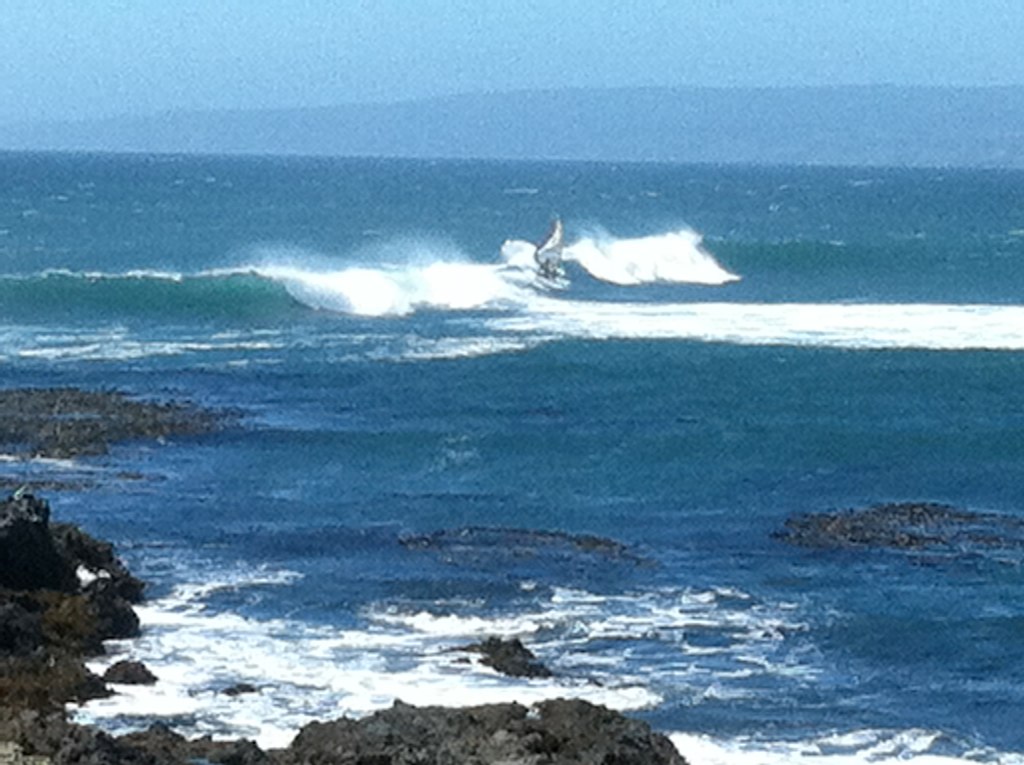
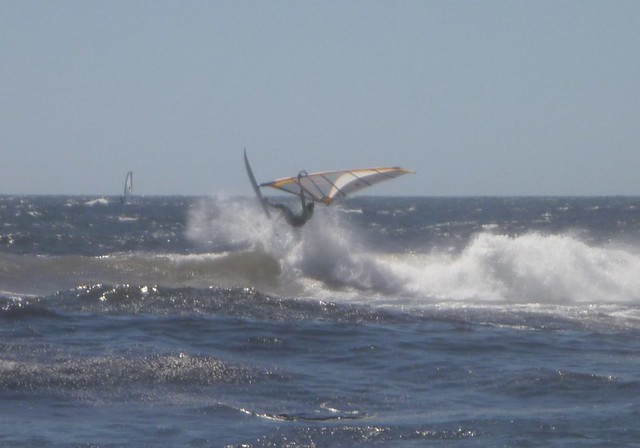
This picture is an example of the type of windsurfing conditions you will find at la Puntilla in Pichilemu. The wind is very offshore, the waves are typically logo-high or more. The nice thing is that most of the sections of this wave don't really "throw". The rides can be over a minute long, but it can be very challenging to get back up to the peak. I've seen experienced windsurfers, even professionals, forced into the 150m swim to shore and the 300m walk walk of shame.


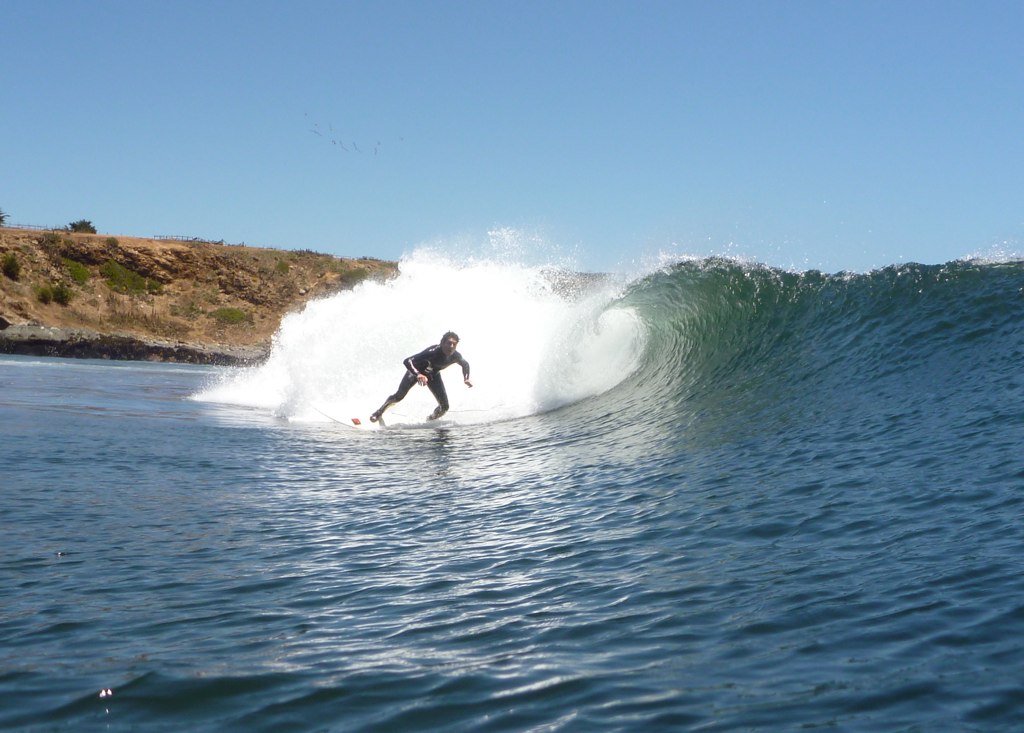
When Juan was in town we scored a couple of days of laid-back chest high surf at Punta de Lobos, considered one of the best left breaking waves in this hemisphere. Initially I was very intimidated to surf there since I had seen all the videos of the triple overhead+ days there, but fortunately there are many days that are reasonable for a surfer of my (pathetic) skill level. A good representation of the wave can be seen in the first picture of the blog. I don't think it is a really fast wave on small days like this, but it's a little steeper in the pocket than a lot of the waves I've surfed. Some of the good guys manage to get barreled in some sections.


I decided to bring only my point-and-shoot camera, which I'm somewhat regretting. Many of the spots beg for a bit longer lens. The good news is that if I make the effort I can get some nice shots from the water. The bad news is all of the pictures I take from the beach are absolute crap. Such is life!

Fun fact: Pichilemu is a Mapuche word (the predominant native community of Chile). It means "small forest". 

Wednesday, November 30, 2011

Finalmente!


The first week of my trip to Chile was busy. I was catching up with family and trying to get things ready for the next two months of easy-breezy windsurfing. These types of things  can be done easily if you're here for a week or two. You would throw down your credit card, rent gear, stay some place next to a windsurfing spot and drink a lot of pisco sours between sessions. Awesome. But, the cost of car rental is pretty high in Chile. I think the other renters I spoke to said they were spending something like 750,000 Chilean pesos per month. This comes out to about $1500 a month. For a week or two, if you just want to get to the water, that's the best way to go, but for me to throw down $3000 for two months (whilst *cough*, being unemployed), really didn't seem like a reasonable option. I eventually figured out a way to make things work with a bit of difficulty and luck. I'll get to that part in another entry.

When I finally made it to my selected first destination of Pichilemu and settled in, the wind predictably died for a few days.  This was fine, as I was able to figure out how the surfing thing works here. I was able to get some help putting footstraps on my board too.


My first session finally came and I didn't have to drive anywhere for it. Right in front of the hostal where I am staying, there is a beach called "Infiernillo". Infiernillo beach can have anything from a overhead barreling wave all the way to a long mushy close out. This particular day, we had some sets that were head high or slightly over. Yes, it was kinda heavy, the same way Waddell will surprise you with an overhead close out on a day dominated by windswell. The wind cranked up to a good 5.0 condition and we managed to get an hour and a half of good sailing. The wind is slightly onshore at this beach and the wave gives you maybe one or two turns most of the time. It actually reminds me quite a bit of Waddell Creek, but going the opposite direction. With a slightly bigger swell, it gets pretty sketchy with big hollow closeouts being the normal fare.

I rather enjoyed working backside this day. I've been trying the shove-it for nearly a year on starboard and have yet to land a clean one. Backside wave riding is great way of learning this move, from what I hear.

The shorebreak, even on a small day, was challenging at times.

I didn't get a lot of pictures, I guess I was trying to sail. "Trying" being the operative word. I didn't have much of a concept of how different it would be to sail waves on port tack rather than starboard. Turns out, it's really different. Even the simple task of hopping over whitewater going the other direction has turned out to be a challenge. Juan was actually in town for this session, but we couldn't get synched up for getting a picture of him out there. I'll get some photos up of his visit next time around.


Did you know: Easter Island is owned by Chile. I guess any remote and practically uninhabited island in the middle of the ocean has to be owned by someone.

Wednesday, November 23, 2011

Santiago de Chile


I arrived in Santiago two weeks ago with an 800 pound bag of windsurfing gear and just slightly more than an iota of comprehendible Spanish. Maybe the bag was a little lighter and maybe my Castellano is slightly better than I've admitted, but after 18 hours of traveling I'm not sure I could lift a loaf of bread or put together a thought that a 5 year old could understand (in English). The good news is now that I have completed this feat of bravery aboard a quiet, air-conditioned airplane with a full menu of Hollywood and art-house movies, I am here for the long haul. Over two months, for what it's worth.

The first week of my trip involved getting reacquainted with long lost family. You know, the kind of family that you haven't seen in 20 years but would gladly sleep on their couch while you get your affairs settled?  Fortunately, they took my freeloading with all the grace of a Kelly Slater cutback. After about a week, I had both of my gringo feet planted firmly on the seismically active ground of Chile.

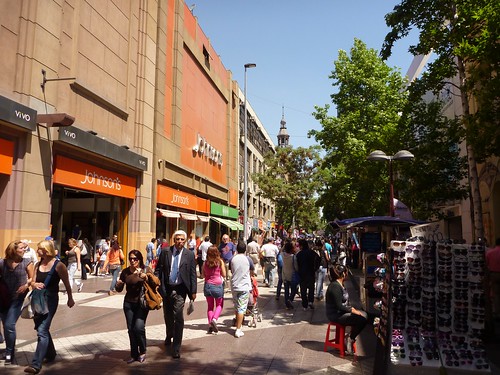
Santiago is a really nice city. I think the metropolitan area is about five million people and it's a city full of energy. When I visualize a South American city, I expect to find chickens literally running around everywhere. Santiago is much more like a city in the US. The metro system is incredibly good. As good as any metro I've ridden in the United States. It has some of the cool-headed attitude of New York without an air of snobbery. It seems like people are just out there trying to make a good living and improve their standard of life somehow. There is a sense of pride about people. There isn't a ton of people around trying to make a quick buck. I encountered very little panhandling.

This is the tallest building in South America. It's not completed but it is somewhat symbolic of a healthy economy.


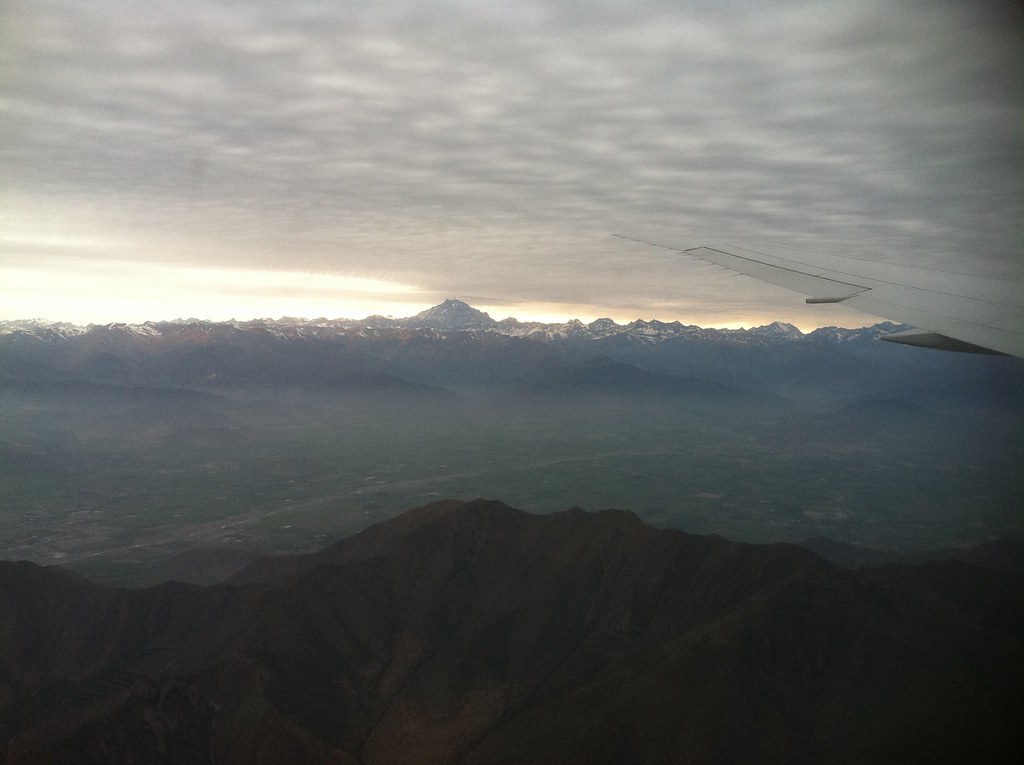
Mount Aconcagua is the tallest mountain in all of the Americas. I snapped this photo with my phone around the time that I wasn't supposed to be using my electronic device. It was worth it. The Andes, as a whole, were mesmerizing. The profile of the mountain range is far different from the others I've flown over.


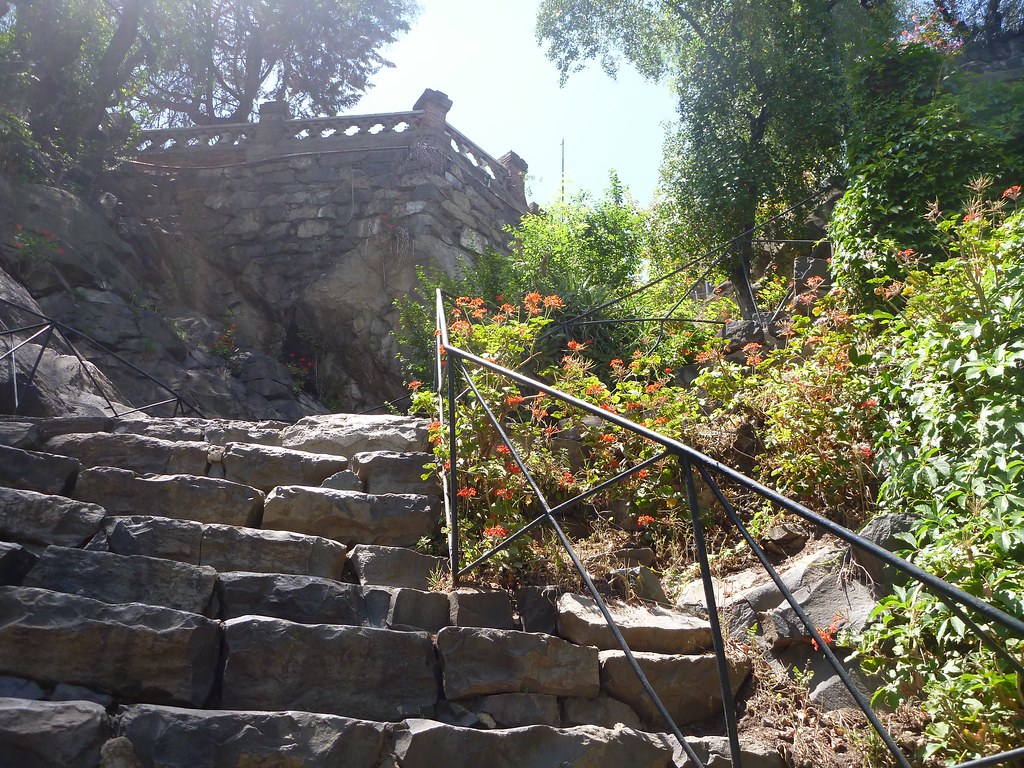
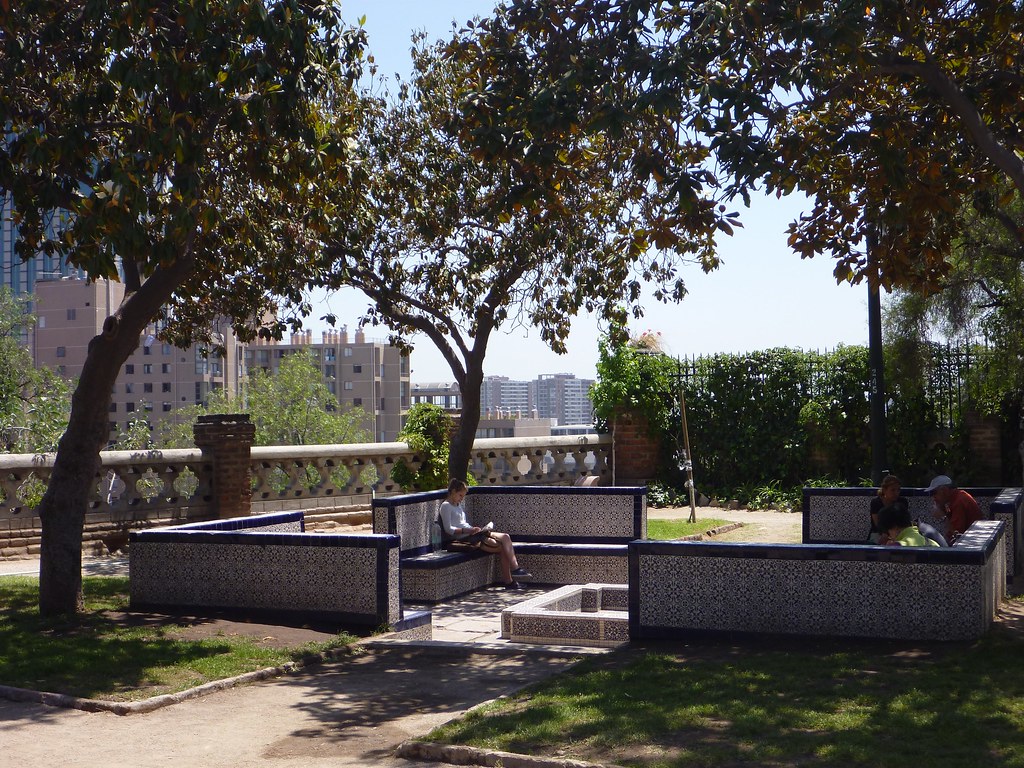
The above three photos are from Cerra Santa Lucia, which is a park built on a steep hill right in the middle of town. It has these cool stone stairs that go through gardens and terraces and the stairs eventually summit at a platform that has a 360 degree city view. Very cool.

Every great city needs great street food. You're never far from an empanada or a variety of other traditional fastfoods in Santiago. I'll go into more detail at some point of this obviously important cultural discussion.

Bellas Artes is a really nice museum to check out. Most of what I could find was modern art.

You know a city is forward thinking when you find an exhibit of speculums hanging over white fur.

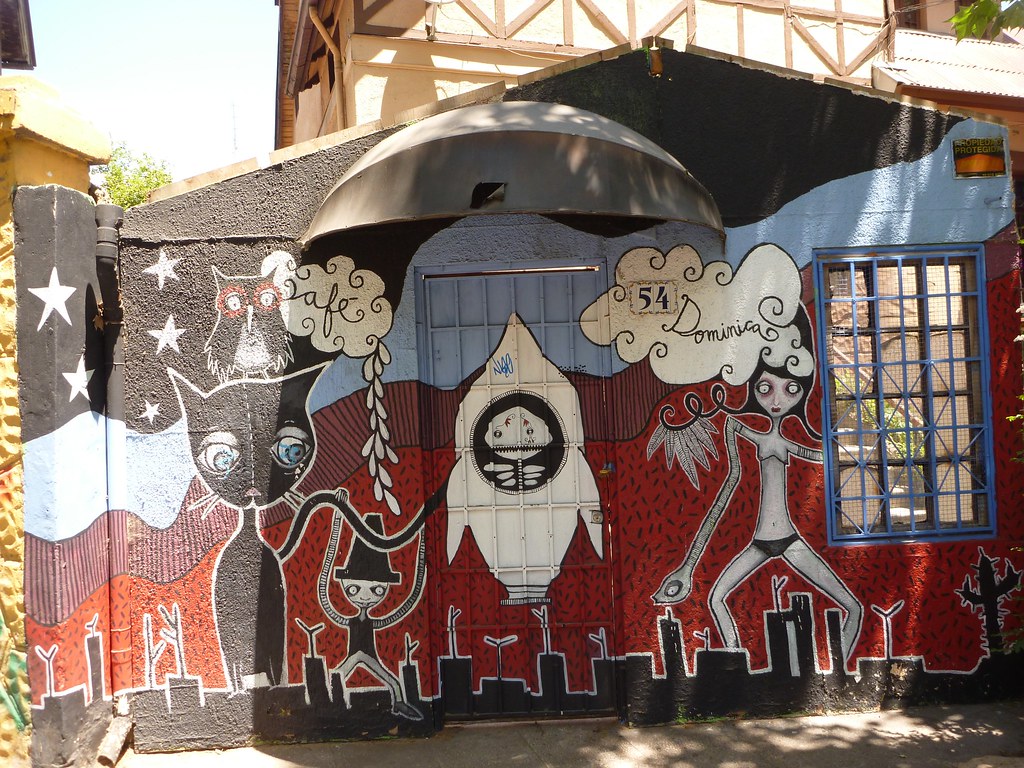
Bellavista is the "bohemian" neighborhood of Santiago. It's pretty fun and funky. I saw more of this kind of cool graffiti than the "tweaker was here" stuff tagged all over the place.

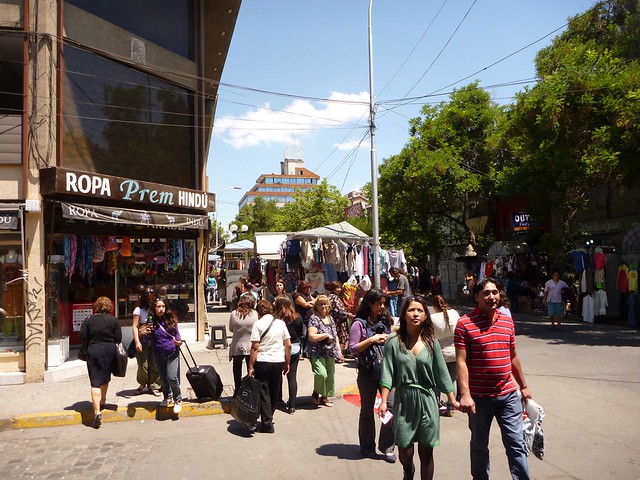
The market in Bellavista was full of energy. Loved the vibe there.

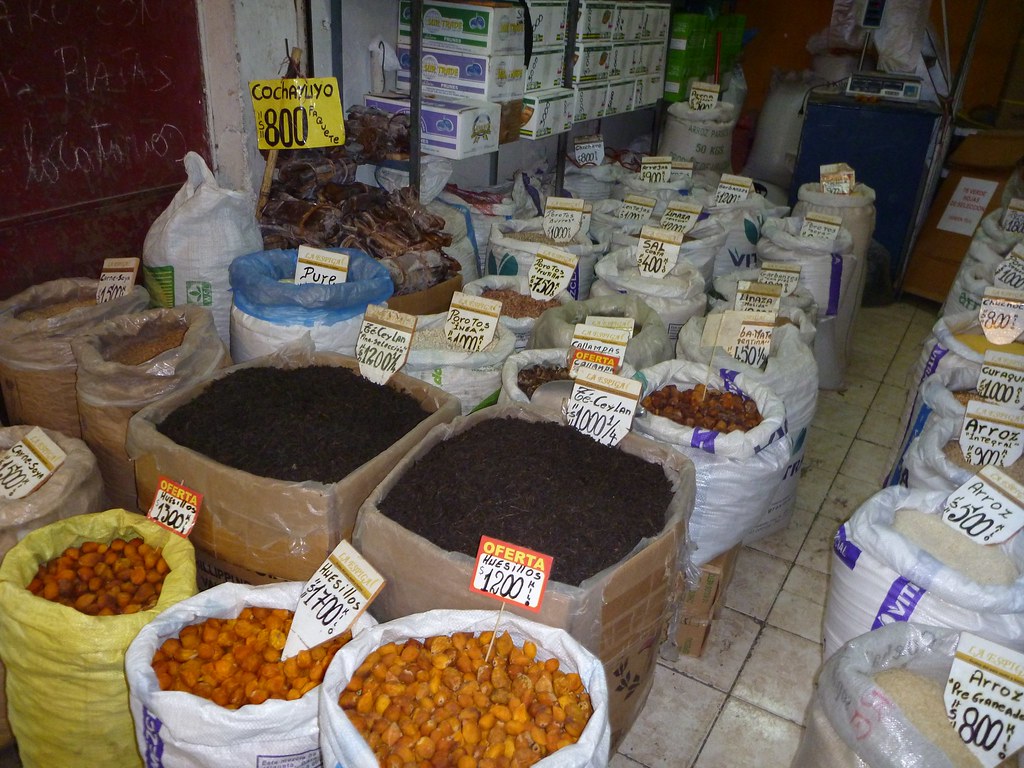
What would a travel blog be without a picture of exotic-looking spices and fruit stuff? A bad one, that's what!  Actually the food thing is more difficult than I thought it would be here, mainly because Chileans use different words to describe pretty much every fruit and vegetable.

Adios weones!  Next time, I promise I'll get some water pictures up.

Sunday, November 13, 2011

Maui - the big finale

Testing the one-handed sailing capabilities of the RRD Quad. Very important.

I'm sure you've all enjoyed reading this enthralling mini-series of Maui based blog posts. I hope no one fell of the edge of their seat. (Mom? you ok?) I've been in Chile for almost a week, but felt like I needed to finish my thoughts on Maui before moving on.

I must say that Maui, as a whole, feels like a dessert that's a little too sweet and rich. The air and the water are always warm. The tropical fruit is delicious and copious. When you crash, the water gives you a warm hug. It's just too much of a good thing. When I consider moving there, it occurs to me that I can't even imagine putting in a day of real work there.

Maui was spectacularly fun. The board test was, again, pretty tedious at times. I do think there is a good bit of utility in the testing of boards by a group of varied sailors. Having ridden my first multi-fin boards 3 years ago in my first test, I can honestly say they have come a long way in terms of their design. Now they can be designed more user friendly for folks that are learning to wave sail as well as be designed for the most advanced riders. These boards are often not the same ones so I think the average windsurfer would be hard pressed to find a board they will totally love without some kind of guidance from the windsurfing media outlets. Over the years the types of boards I like has changed a ton. At my first test, I loved the freestyle-wave boards that were easy to get going and forgiving through jibes.  Now I find myself wanting a board that turns a bit more aggressively on the wave, or one that is well suited for freestyle/crossover purposes. Just like the iPhone, things get noticeably better every year.

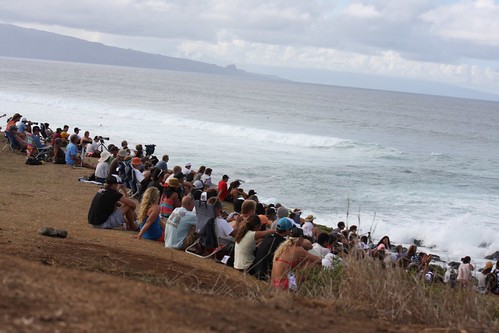
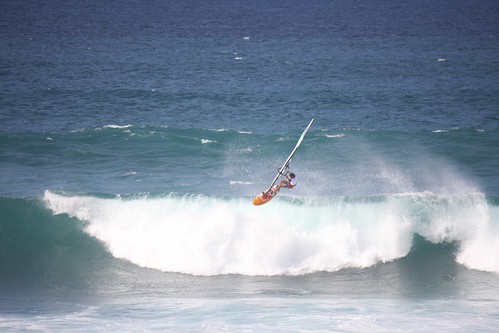
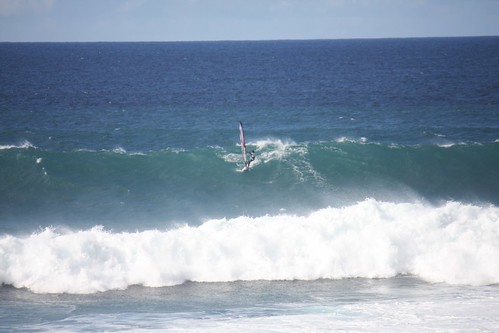
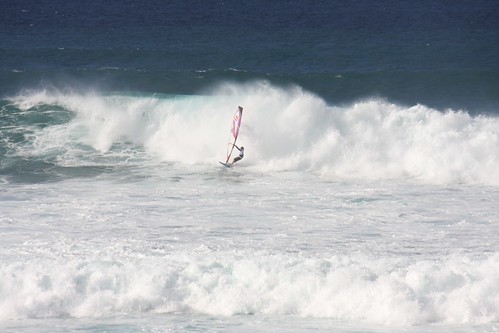
My last few days in Maui were very memorable and I hardly sailed.  The AWT competition was wrapping up and I saw windsurfing at the highest level I had ever seen. The wind was very light and flukey, and the competitors were braving gigantic waves that were over mast high. At Ho'okipa there is a channel that allows you to get out without hitting big waves, and even that was closed out.  We saw heats of amateurs and experts alike getting served large slices of humble pie on the rocks. During some of the heats, practically all of the competitors ended up getting pushed on the rocks. At times, all of the competitors were struggling to get out and no one was outside trying to catch a wave. It was very, very exciting.

Here are some photos that my girlfriend took from the competition:


I believe this is Josh Stone with an aerial. Some of the pros (and retired pros) who happen to live there but can't travel to many events were there. In some ways there were old timers vs. new timers and the old timers definitely held their own!


Also, some of the top-flight PWA guys joined in. Normally they are focused on the PWA tour (aka the European Wave Tour) so they miss the AWT events. Hopefully having guys like Marcilio "Brawnzinhio" Browne join and not get 1st place will turn some heads about the legitimacy of the AWT. Marcilio threw about 1000 of these goiters and landed seemingly 998 of them.


Is that two Marcilios in one picture? Why no, that's a goiter by the USA's own Bryan Metcalf-Perez. Bryan for sure hasn't gotten to sail this spot as much as most of the others, (or even wavesail for that matter) but you can tell that he could become one of the better wavesailors out there if he trained a bit more on the coast. That said, maybe he would be better served focusing on his Freestyle career?


Kai Katchadourian katches a juicy one. The final heat was a tough call. I think Kai placed 4th, but I gotta say I think that was a little bunk. Kai killed it with wave selection and had some of the longest rides and biggest aerials. For sure Camille Juban was the outright winner, but I enjoyed watching Kai sail these conditions more than Marcilio (who basically did one big move on the waves he took but didn't get a lot of nice looking top to bottom turns). That's the way it was though. The judges over and over scored a one-goiter wave higher than a really sweet fast ride with lots of spray and maybe an aerial. C'est la vi.


Marcilio Wave 360. I could do that. In a dream.


Lots of people were watching.


I don't have a lot of really good pictures of Camille, but he was amazing to watch. No one else was generating as much speed as he was, or turning with so much style. Hats off to this guy, I had never heard of him before this contest.


Josh Stone is such a badass.


Berndt Roediger throwing some style out there with the head toss a la Levi. Levi registered but didn't show up. I get that he's not into competition, but everyone would have loved to see him.


This was the biggest wave I saw anyone catch  all week. We were watching Berndt struggle to get over a huge outside set. He got over the first, the second, then the 3rd, just as they were cresting. Then this one came and everyone started yelling 'JIBE JIBE JIBE' from the beach. For sure Berndt couldn't have heard the crowd over the massive waves breaking, but sure enough he jibed onto this giant. There was no where to go on it but it's always great to see someone catch a wave this size, sorta like watching people surf Waimea.


Here's the same wave breaking.


And here was the penalty. A tough time getting back out with white water that goes over your 340cm mast.


I've got more pictures here and they're full sized, if you're interested.

http://www.flickr.com/photos/61591219@N07/sets/72157628120753682/